
What Can a Handyman Legally Do in South Carolina Without a License?
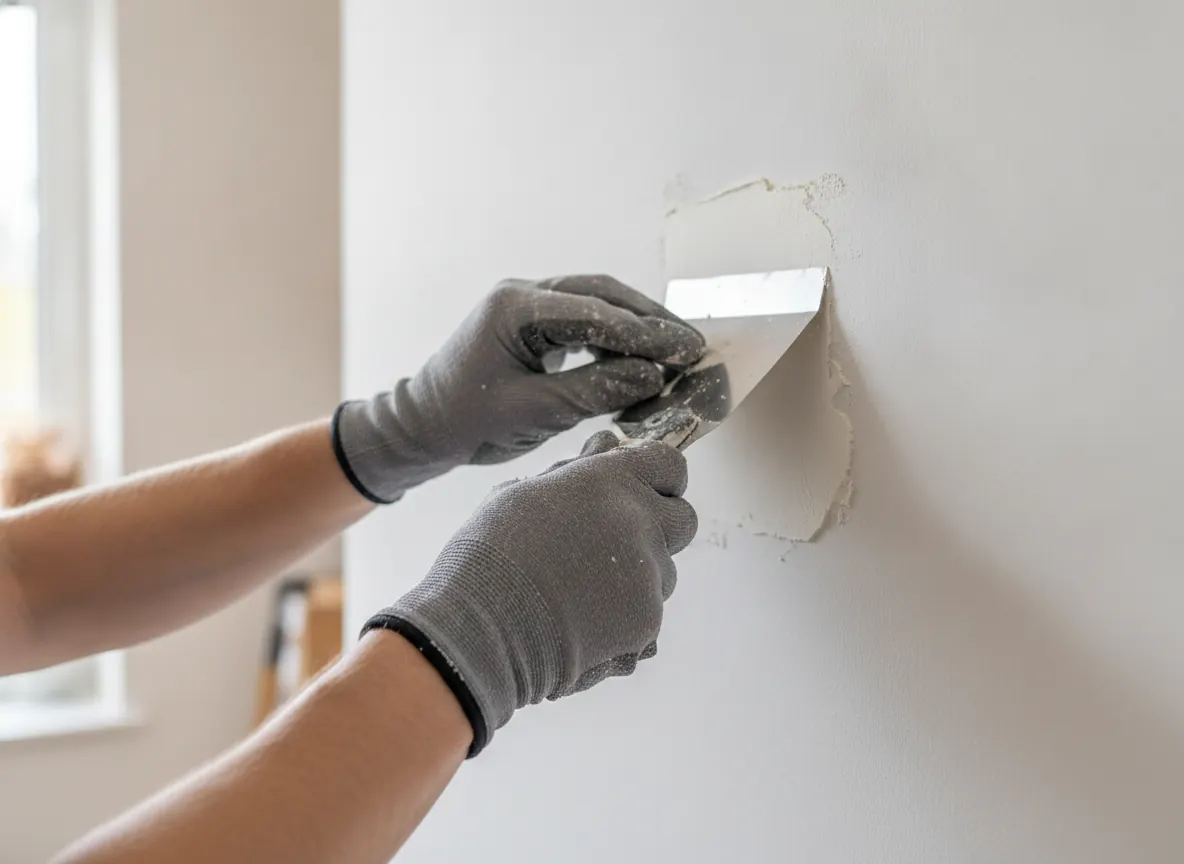
People ask me this on the phone more than you'd think. Usually it comes out as "do you need a license for that?" or "can you do the plumbing too?" Fair questions. The honest answer lives in two chapters of South Carolina law, and most of it fits on one page. Here it is, in plain words, with the statute numbers so you can check me.
One thing first. I'm a handyman in Mount Pleasant who does small jobs himself. I don't hold a state contractor registration or trade license, and this article explains exactly what that means for the work I take and the work I turn down. It's general information, not legal advice. The statutes are at scstatehouse.gov under Title 40, Chapters 59 and 11, and the state's own summaries are on the LLR Residential Builders Commission pages.
The short version: $500, $5,000 and the three trades
South Carolina doesn't require a contractor's license for handyman jobs under $500 (S.C. Code §40-59-20). Above that line the state splits home repair work into categories:
- Under $500 per job: no state license or registration is needed for repair work in any trade. That is the handyman zone, and it is where I work.
- Over $500 in carpentry, drywall, painting, siding, flooring, roofing, masonry, stucco, insulation or solar: the person doing the work must hold a Residential Specialty Contractor Registration from the Residential Builders Commission.
- Over $500 in plumbing, electrical or HVAC: the person needs a Residential Plumber, Electrician or HVAC license, which requires passing an exam.
- Over $5,000 for any residential repair or improvement: that is Residential Builder territory, which is a license, not a registration.
- Any addition to a house: needs a licensed residential builder supervising, whatever the price.
Commercial jobs over $10,000 need a state Contractor's Licensing Board license (S.C. Code §40-11-30). That one rarely comes up for a residential handyman.
Where the $500 figure comes from
Section 40-59-20(7) defines a "residential specialty contractor" as an independent contractor who does construction work, repairs or improvements "which requires special skills and involves the use of specialized construction trades or craft, when the undertakings exceed five hundred dollars." The same section lists the trades: plumbers, electricians, heating and air installers and repairers, vinyl and aluminum siding installers, insulation installers, roofers, floor covering installers, masons, drywall installers, carpenters, stucco installers, painters and wall paperers, and solar panel installers.
You'll still see older articles quoting $200. Act No. 186 of 2022, effective May 16, 2022, raised the threshold to $500.
The statute says "undertakings," not "labor." I read that as the whole job, materials included, and I price that way to stay on the right side of it. I haven't found a state page that says otherwise, so if a $450 job turns into a $600 job once the lumber is counted, I treat it as a $600 job.
Registration versus license: they are not the same word
This is the part most handyman websites blur, so I'll be exact. The statute says plumbers, electricians and HVAC installers "must be issued specialty contractor licenses after passing the required examination." Siding installers, masons, drywall installers, carpenters, stucco installers, painters and wall paperers, and solar installers "must be issued specialty contractor registrations." The LLR page adds that a registration is limited to three trade classifications and that an examination is not required to become a registered specialty contractor.
So a handyman who says he's "licensed" for drywall or carpentry is, at most, registered. There is no drywall license in South Carolina. And a registration in carpentry does not let anyone touch plumbing or wiring above $500. The statute is blunt about it: a residential specialty contractor "is prohibited from undertaking work outside the scope of his license or registration, including employing, hiring, and contracting or subcontracting with others to perform such work on his behalf." That last clause matters. A handyman can't take your $900 electrical job and quietly hand it to a buddy.
You can look anyone up. The Residential Builders Commission lookup is at verify.llronline.com, linked from llr.sc.gov/res. If someone tells you they're licensed, ask for the number and check it. I'd rather you check than take my word, which is why I tell you up front that I hold no registration or license at this time.
What that means when you call me. For bigger jobs, or anything involving plumbing, electrical or HVAC over $500, I'll tell you up front that you need a licensed specialty contractor, and I won't take the job. I'll fix a dripping faucet, swap a light fixture or unclog a drain, but I don't rewire, re-pipe or replace your water heater, and I won't send a buddy to do it either.
What a handyman can do, then
Quite a lot, as long as each job stays small: rotted trim and deck-board replacement, door and window adjustments, drywall patching, caulking, touch-up painting, shelving and TV mounting, cabinet hardware, screen and storm-door repair, fence and gate repair, small tile and grout fixes. On the plumbing and electrical side it is minor only: a leaky faucet, a running toilet, a slow drain, like-for-like fixture swaps. You can see how I group it on the home repairs and punch list page and the painting, caulk and fixture swap page.
The way to stay under the line on a long list is to treat each item as its own job, priced separately, which is how I quote anyway. A door adjustment, a drywall patch and a faucet swap on the same morning are three small undertakings, not one $900 contract. I'll say when a single item is going to run past $500 on its own, and that item gets referred.
What the $500 rule doesn't say
Plumbing, electrical and HVAC work over $500 in South Carolina must be done by a state-licensed residential plumber, electrician or HVAC contractor (S.C. Code §40-59-20; LLR). The LLR pages put it in one line each: residential plumbing work exceeding $500 requires a license, residential electrical work exceeding $500 requires a license, residential HVAC work exceeding $500 requires a license. Jobs over $5,000, and any addition to your house, need a licensed residential builder. If a registered specialty contractor does a job over $5,000 for a homeowner, the statute also requires a surety bond (§40-59-220(D)).
There is also a short list in §40-59-265 that people sometimes mistake for a handyman exemption. It says a homeowner doing certain minor work on their own house is exempt from the chapter and from building permits: painting, papering, tiling, carpeting, cabinets and countertops, fences not over seven feet, decks not exceeding 200 square feet and not more than 30 inches above grade, stopping leaks and clearing clogs, replacing lamps, and so on. Read it carefully, though. It is written for owners doing their own work. It does not say a hired handyman is free of the $500 rule for those items. Its real value is as a state list of work that doesn't need a building permit, which is handy when you're wondering whether a small deck or fence repair needs paperwork.
Why it matters to you, not just to me
Section 40-59-30 makes it a misdemeanor to engage, or even offer to engage, in specialty contracting without the required license or registration, with a fine of $500 to $10,000, or at least thirty days in jail, or both. The same section says such a person "may not file a mechanics' lien or bring an action at law or in equity to enforce the provisions of a contract," so you have little recourse if the work is bad. Building officials must also refuse permits for work that requires a license unless the applicant shows one (§40-59-280). A contractor who offers to "skip the permit" on a large job is waving a flag.
None of that changes how I run small jobs: a written quote first, the price doesn't move unless you add work, and I tell you plainly when something belongs to a licensed trade. Prices for the small stuff are on the pricing page.
Common questions
Does a handyman need a license in South Carolina?
Not for jobs under $500. S.C. Code §40-59-20 sets the residential specialty contractor threshold at $500 per undertaking. Over that, carpentry, drywall and painting work needs a Residential Specialty Contractor Registration, and plumbing, electrical or HVAC work needs a state trade license. Over $5,000, the job needs a licensed residential builder.
Can a handyman do plumbing or electrical work in South Carolina?
Only small jobs. Residential plumbing, electrical and HVAC work exceeding $500 requires a state license, and a handyman without one may not do it, offer it or subcontract it out. A dripping faucet, a running toilet, a slow drain or a like-for-like light fixture swap is the kind of minor work that stays under the line. Rewiring, re-piping and water heater replacement are licensed trade work.
Is a registration the same as a license?
No. Plumbers, electricians and HVAC installers are licensed after an exam. Carpenters, drywall installers, painters and similar trades are registered, with no exam and at most three trade classifications. You can check either at verify.llronline.com. I hold neither at this time, so I keep every job under the $500 line and refer anything bigger.
Does the $500 limit include materials?
The statute says "undertakings exceed five hundred dollars," and I haven't found a state page that limits that to labor. I treat the whole job, materials included, as the figure, and I split a long list into separate small jobs, each quoted on its own.